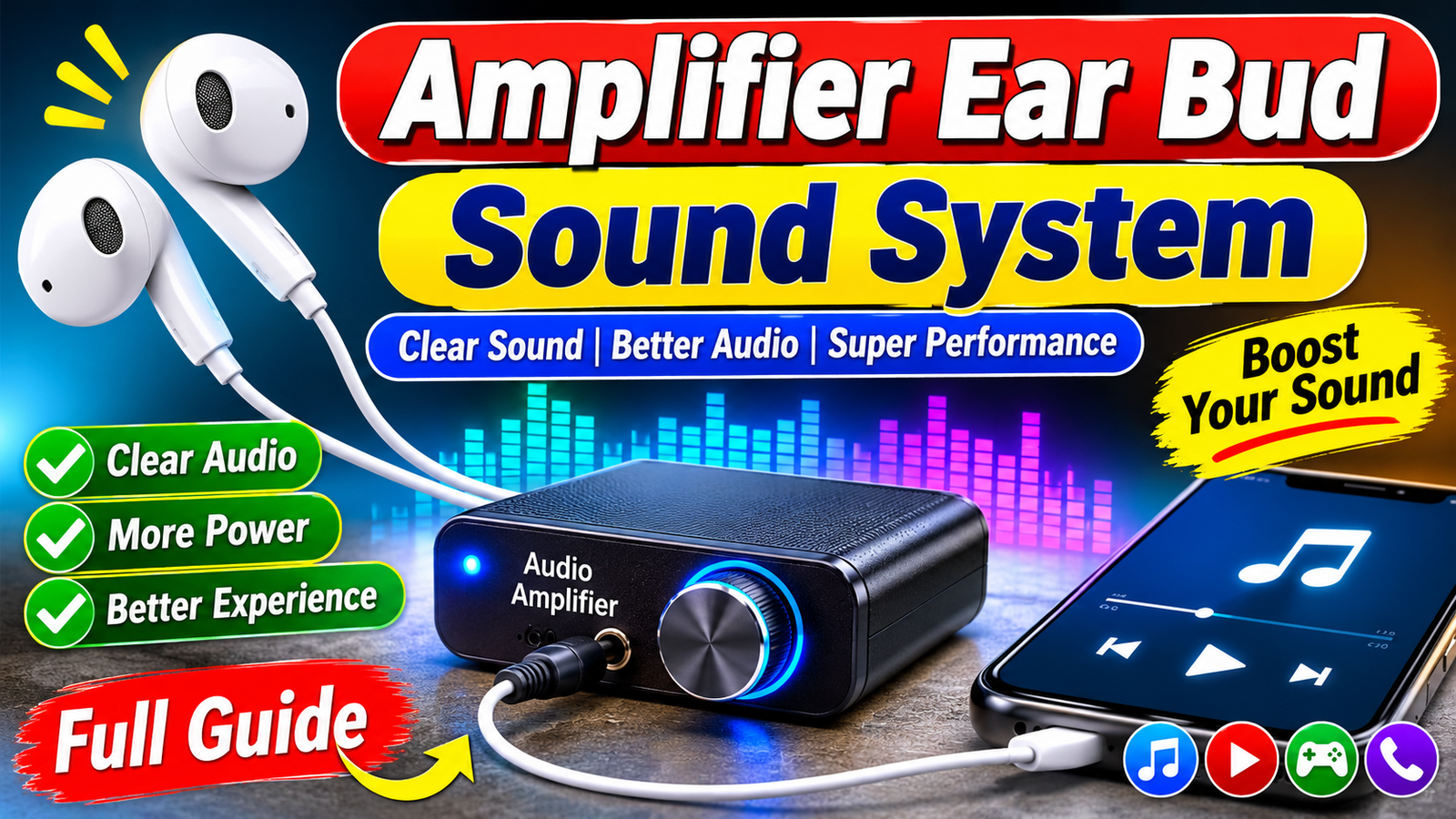
Amplifier Ear Bud Sound System: A Complete Guide to Better Audio Quality, Clear Sound, and Modern Listening
Introduction
An amplifier ear bud sound system is an interesting combination of modern audio technology designed to improve the listening experience through better sound output, enhanced audio clarity, and efficient signal processing. Whether someone enjoys music, watches videos, listens to podcasts, plays mobile games, or attends online meetings, sound quality plays an important role in everyday digital experiences.
Earbuds have become one of the most popular audio accessories because they are portable, lightweight, convenient, and compatible with smartphones, tablets, laptops, and many other devices. However, not all earbuds deliver the same sound performance. Some models provide balanced audio, while others focus on bass, vocals, noise reduction, or overall sound clarity.
Understanding how an amplifier works with an earbud sound system can help users make better decisions when choosing audio accessories. This guide explains amplifier technology, earbud sound quality, important features, compatibility, practical uses, and tips for improving your listening experience.
What Is an Amplifier Ear Bud Sound System?
An amplifier ear bud sound system refers to an audio setup in which amplification technology is used to strengthen audio signals and deliver sound through earbuds. An amplifier receives a relatively weak audio signal and increases its power to a level suitable for driving audio equipment.
Modern smartphones, computers, wireless earbuds, and portable audio devices already contain integrated amplification components. These components are designed to provide sufficient power for compatible headphones and earbuds without requiring a separate external amplifier.
The purpose of amplification is not simply to make audio louder. A properly designed audio system can help maintain clear sound output, support the connected audio device, and deliver a comfortable listening experience when used within its intended specifications.
How Audio Amplification Works
Audio amplification begins when a device generates an electrical audio signal. This signal represents the sound information contained in music, speech, videos, or other media.
An amplifier processes the signal and increases its electrical power. The earbuds then convert the electrical signal into sound waves that the listener can hear.
The basic audio process includes several stages:
- An audio source produces a sound signal.
- The signal travels through the device’s audio circuitry.
- An amplifier provides the required signal power.
- The earbud speaker drivers convert the signal into sound.
- The listener experiences the final audio output.
The quality of each component can influence the overall listening experience. A good audio source, suitable amplification, properly designed earbuds, and compatible settings can contribute to better sound reproduction.
Important Features of a Modern Earbud Sound System
Modern earbuds offer many features that influence sound quality, convenience, and usability.
1. Clear Audio Reproduction
Clear audio allows listeners to understand voices, musical instruments, and other sound details more easily. Audio clarity is particularly important when listening to educational content, podcasts, phone calls, audiobooks, and online meetings.
The quality of the earbud drivers, audio processing, source material, and device compatibility can all influence clarity.
2. Balanced Sound Performance
A balanced sound profile combines bass, midrange, and treble frequencies in a way that creates a natural listening experience.
Bass frequencies provide depth and impact, midrange frequencies carry much of the vocal and instrumental detail, while treble frequencies contribute brightness and high-frequency information.
Different listeners may prefer different sound profiles depending on their musical preferences and listening habits.
3. Comfortable Listening Experience
Comfort is one of the most important factors when selecting earbuds. Lightweight designs, appropriate ear tips, ergonomic shapes, and secure fitting can make earbuds more comfortable during everyday use.
A comfortable fit can also improve passive sound isolation by helping the ear tips create a suitable seal.
4. Wireless Connectivity
Bluetooth technology allows compatible earbuds to connect wirelessly with smartphones, tablets, laptops, and other supported devices.
Wireless connectivity offers freedom of movement and reduces the inconvenience of cables. Modern Bluetooth audio systems may also support different audio codecs, connection features, and energy-efficient technologies.
The actual performance depends on the supported Bluetooth version, device compatibility, software, and environmental conditions.
5. Noise Reduction Technology
Some earbuds include active noise cancellation, commonly known as ANC. This technology uses microphones and electronic processing to reduce certain types of background noise.
Noise reduction can be useful while travelling, working in busy environments, or listening in places where background sounds may become distracting.
However, noise cancellation performance varies between models and environments. It is not designed to eliminate every sound completely.
Why Amplifier Quality Matters
Amplifier quality can influence the overall performance of an audio system. A suitable amplifier should provide sufficient power for the connected earbuds while maintaining stable and clean audio output.
An amplifier that is properly matched to the earbuds can support normal listening levels without unnecessary distortion. However, adding a more powerful amplifier does not automatically improve sound quality.
Many modern earbuds are designed to work directly with smartphones and other portable devices. For these products, the built-in amplifier is generally sufficient for normal use.
External amplification is more relevant for certain specialized audio equipment, high-impedance headphones, professional listening systems, and particular audio applications.
Wired Earbuds vs Wireless Earbuds
Both wired and wireless earbuds offer advantages depending on the user’s requirements.
Wired Earbuds
Wired earbuds connect directly through a supported audio connection. They can be convenient because they do not require charging their own batteries when they are passive designs.
Some users prefer wired audio because of its simplicity, predictable connectivity, and suitability for certain professional applications.
Wireless Earbuds
Wireless earbuds provide greater freedom of movement and are particularly convenient for smartphones, workouts, travel, and everyday activities.
They usually include batteries, Bluetooth circuitry, integrated audio processing, and sometimes microphones or touch controls.
The choice between wired and wireless earbuds depends on comfort, sound preferences, compatibility, battery requirements, and personal convenience.
How to Improve Earbud Sound Quality
Users can improve their listening experience by following several practical steps.
Choose the Correct Ear Tips
Ear tips that fit properly can improve comfort and help provide better passive noise isolation. Many earbuds include multiple ear-tip sizes so users can select the most suitable option.
Adjust Audio Settings
Smartphones and audio applications may include equalizer settings. These settings allow users to adjust bass, midrange, and treble according to their preferences.
A balanced setting is often a good starting point before making additional adjustments.
Use High-Quality Audio Sources
The quality of the original audio file or streaming source can affect the listening experience. High-quality recordings can preserve more audio detail, depending on the playback device and supported format.
Keep Earbuds Clean
Regular cleaning can help maintain hygiene and prevent earwax or dust from affecting the earbud openings.
Cleaning should be performed carefully according to the manufacturer’s instructions. Avoid exposing electronic components to excessive moisture.
Check Device Compatibility
Some earbuds and audio accessories require specific connections, supported Bluetooth profiles, or compatible software features.
Before purchasing an accessory, users should check compatibility with their smartphones, computers, or other audio devices.
Amplifier Ear Bud Sound System for Music
Music listening is one of the most common uses of earbuds. A suitable sound system can make vocals, instruments, rhythms, and background details easier to appreciate.
Different genres may benefit from different sound characteristics. Electronic music and certain pop genres may emphasize bass, while acoustic music and classical recordings may benefit from a more balanced sound profile.
Listeners should consider their musical preferences when selecting earbuds rather than choosing a product based only on advertised specifications.
Amplifier Ear Bud Sound System for Gaming
Earbuds are also popular among mobile and computer gamers. A suitable audio system can make game sounds, dialogue, and environmental audio easier to hear.
Some gaming earbuds offer low-latency modes designed to reduce the delay between on-screen action and audio playback.
However, gaming performance depends on the complete system, including the earbuds, connected device, game software, connection method, and audio settings.
Amplifier Ear Bud Sound System for Calls and Online Meetings
Earbuds with built-in microphones can be useful for phone calls, video conferences, online classes, and remote work.
Microphone quality, background noise processing, Bluetooth stability, and fit may affect communication quality.
Users who frequently participate in meetings should consider microphone performance and connection reliability in addition to audio playback quality.
Battery Life and Charging
Battery performance is an important consideration for wireless earbuds. Battery life varies according to model, volume level, noise cancellation settings, connection conditions, and usage patterns.
Many wireless earbuds include charging cases that provide additional charging opportunities when the earbuds are not being used.
To maintain battery performance, users should follow the manufacturer’s charging recommendations and avoid unnecessary exposure to extreme temperatures.
Safe Listening Practices
Listening at a comfortable volume is an important part of responsible earbud use.
Extended listening at high volumes may increase the risk of hearing damage. Users should keep the volume at a comfortable level, take regular listening breaks, and avoid increasing volume unnecessarily in noisy environments.
Some smartphones include headphone safety notifications or volume monitoring features that can help users manage their listening habits.
A good listening experience should prioritize comfort, clarity, and hearing health rather than maximum volume.
How to Choose the Right Earbuds
Before purchasing an amplifier ear bud sound system or compatible audio accessory, consider the following factors:
- Sound quality and audio balance
- Comfort and ear-tip design
- Wired or wireless connectivity
- Bluetooth compatibility
- Microphone performance
- Battery life and charging case
- Noise cancellation features
- Device compatibility
- Build quality and durability
- Price and warranty support
Reading product specifications and genuine user reviews can help buyers understand how a particular model performs in everyday situations.
Common Misconceptions About Amplifiers and Earbuds
One common misconception is that a more powerful amplifier always produces better sound. In reality, sound quality depends on multiple factors, including amplifier design, earbud drivers, audio source quality, compatibility, and listening settings.
Another misconception is that louder audio always contains more detail. Excessive volume may make sound uncomfortable without improving clarity.
Similarly, expensive earbuds are not necessarily the best option for every user. Personal preferences, comfort, and intended usage are equally important when selecting audio equipment.
Conclusion
An amplifier ear bud sound system combines audio amplification and earbud technology to provide convenient personal listening. Modern audio devices are designed to deliver practical sound performance for music, videos, gaming, calls, education, and entertainment.
Understanding the role of amplifiers, earbud drivers, wireless connectivity, sound balance, noise reduction, and device compatibility can help users make informed decisions.
The best audio experience is not necessarily the loudest or most expensive one. It is the experience that provides clear sound, comfortable listening, reliable performance, and suitable features for everyday needs.
By selecting compatible earbuds, using appropriate audio settings, maintaining the equipment, and following safe listening practices, users can enjoy a more satisfying audio experience across their favorite devices and activities.
Keywords: Amplifier Ear Bud Sound System, Earbud Sound Quality, Audio Amplifier Technology, Wireless Earbuds, Bluetooth Audio, Clear Sound, Earbud Audio Performance, Personal Audio System, Headphone Amplification, Modern Audio Technology.