Introduction
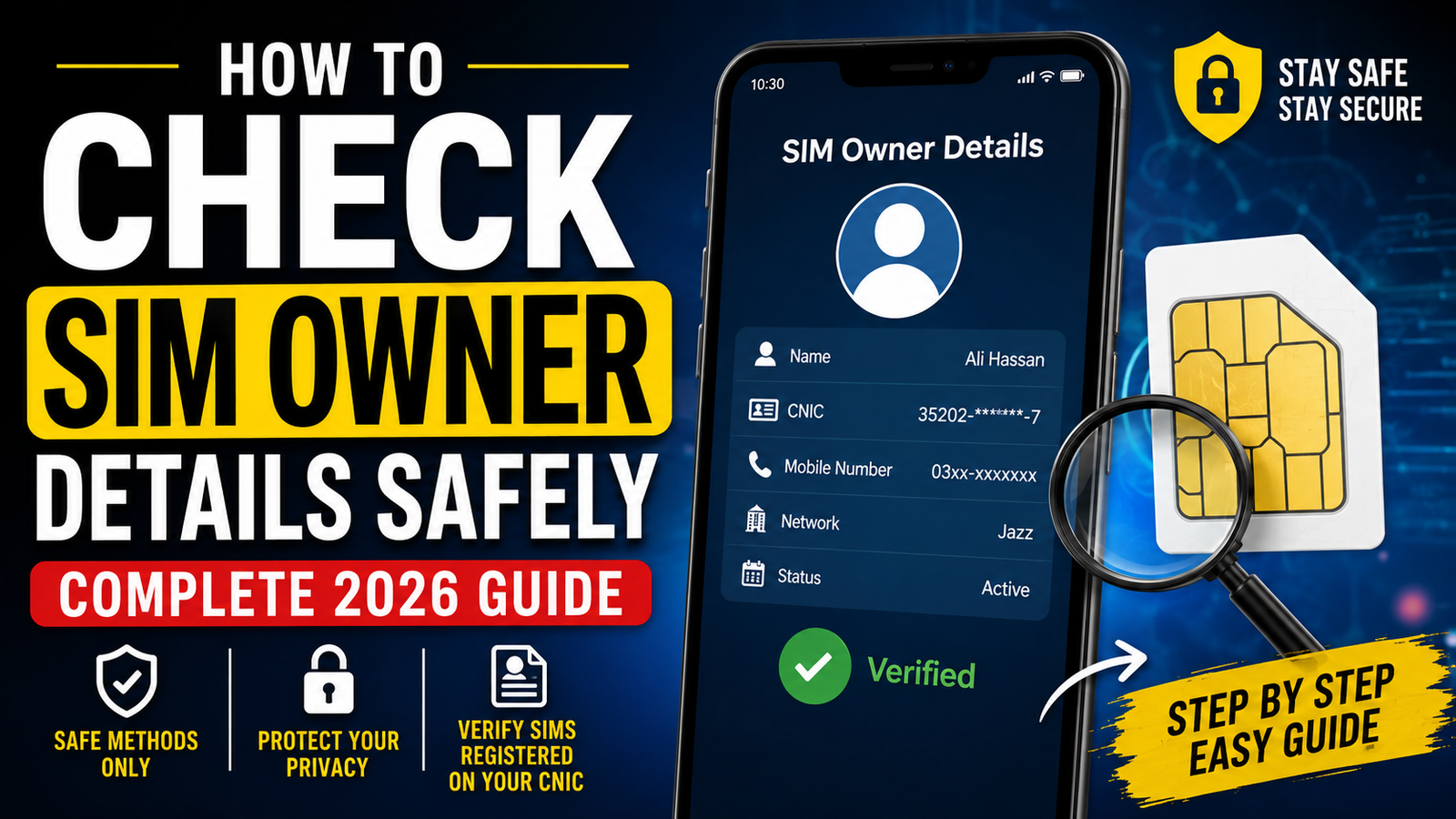
Checking SIM owner details can be useful when you want to verify whether a mobile number or SIM is registered under your own identity. It can also help you identify unauthorized SIMs associated with your CNIC and take appropriate action to protect your personal information. However, SIM ownership information is private and should not be treated like ordinary public information.
In Pakistan, mobile subscriber information is connected with identity verification and telecom records. The Pakistan Telecommunication Authority (PTA) has published guidance recommending that users periodically check the number of SIMs issued in their name and take action if they discover an unauthorized SIM. PTA’s National Telecom CERT specifically advises users to check SIMs associated with their CNIC through the official process and block illegally issued SIMs.
This complete 2026 guide explains what SIM owner details mean, how legitimate SIM verification works, how to check SIMs registered against your own identity, what to do if you find an unknown SIM, and how to stay away from websites and apps that claim to reveal private subscriber information.
What Are SIM Owner Details?
SIM owner details are information associated with the person or organization to whom a SIM card has been officially registered. Depending on the telecom system and the purpose of verification, subscriber records may be associated with information such as the registered person’s identity and mobile number.
Because these details are linked to personal information, they should be handled carefully. PTA’s telecom cybersecurity guidance treats information such as names, CNIC numbers, addresses, phone numbers, and related identification information as personal data.
For ordinary users, the safest purpose of a SIM ownership check is to verify their own SIM registrations, rather than trying to obtain another person’s private identity information.
Why Check SIMs Registered to Your CNIC?
Regular SIM verification is an important digital-security habit. You may have forgotten about an old SIM, replaced a number, or discovered that a number is still associated with your identity.
Checking your registered SIMs can help you:
- Identify SIMs you no longer use.
- Discover potentially unauthorized SIM registrations.
- Keep your telecom records organized.
- Reduce the risk of identity misuse.
- Take action against an unknown SIM.
- Improve your overall personal-data security.
- Confirm that your active numbers are registered correctly.
PTA’s cybersecurity guidance specifically recommends periodically checking the SIMs issued in your name and blocking illegally issued SIMs when necessary.
How to Check SIM Owner Details Safely
The safest approach is to use official telecom and regulatory channels rather than third-party websites promising private information.
Check SIMs Registered Under Your Own CNIC
For users in Pakistan, PTA guidance states that subscribers can check the number of SIMs issued in their name by sending their CNIC number to 668. This is intended for checking SIM registrations associated with your own identity.
Before using any SIM verification service, make sure you are using an official method and that you understand what information the service is designed to provide.
Visit an Official Cellular Franchise
If you need more assistance or find a SIM registration that you do not recognize, visit the official franchise or customer service center of the relevant mobile network.
Take your original identification document and explain the issue to the representative. Official channels can provide guidance about your own subscriber records and available procedures.
PTA’s guidance also recommends purchasing SIMs from cellular franchises rather than informal kiosks or unauthorized sellers.
Use Official Complaint Channels
If you believe a SIM has been registered without your authorization or you are facing a telecom-related problem, an official complaint channel is safer than using an unknown SIM database website.
PTA’s Complaint Management System allows telecom consumers to register and track complaints through a verified user profile. The PTA documentation describes account registration using identity and contact information and provides a process for submitting complaints.
Can You Check Another Person’s SIM Owner Name?
You should not rely on unofficial websites, apps, bots, or databases that claim they can reveal the private name, CNIC, address, or other personal information of another SIM owner.
A phone number alone should not be treated as permission to access someone’s private subscriber information. If you have a legitimate reason involving fraud, harassment, unauthorized SIM activity, or another serious issue, use the appropriate telecom provider or official complaint and legal channels.
This approach protects both your privacy and the privacy of other mobile users.
How SIM Verification Helps Protect Your Identity
SIM registration is closely connected to identity verification. If an unauthorized person obtains or misuses personal information, it can create security risks.
PTA’s National Telecom CERT warns about SIM-swapping fraud, where an attacker attempts to convince a mobile carrier to transfer a victim’s number to another SIM. PTA recommends protecting personal information, using strong account security, and contacting the mobile provider immediately if calls or messages unexpectedly stop.
For this reason, SIM ownership checking should be considered part of a broader personal cybersecurity routine.
What to Do If You Find an Unknown SIM on Your CNIC
Finding a SIM registration that you do not recognize should not be ignored. Take action through official channels.
- Check whether the number belongs to an old SIM you previously used.
- Contact the relevant mobile network’s official customer service.
- Visit an authorized franchise if identity verification is required.
- Ask about the procedure for blocking or disassociating an unauthorized SIM.
- Keep records of your complaint or service request.
- Use PTA’s official complaint process if the issue is not resolved.
- Monitor your other accounts for unusual activity.
- Avoid giving your CNIC or biometric information to unverified individuals.
The goal should be to secure your identity and remove unauthorized telecom registrations through legitimate procedures.
Features of a Safe SIM Verification Process
A legitimate SIM verification process should prioritize security and identity protection.
- Official telecom or regulatory channels.
- Identity verification where required.
- Secure handling of subscriber information.
- Clear instructions for reporting unauthorized SIMs.
- Proper customer-support procedures.
- Complaint tracking where available.
- Protection against unauthorized access.
- Transparent information about the service.
A legitimate service should never require you to hand over sensitive personal information to an unknown website simply because it promises instant SIM owner details.
Benefits of Checking Your SIM Registration
Regular verification can provide several practical benefits.
- Better control over your mobile identity.
- Early detection of unauthorized SIM registrations.
- Improved personal-data protection.
- Greater awareness of active mobile connections.
- Easier management of old SIM cards.
- Reduced exposure to identity-related fraud.
- Faster action when a suspicious registration is discovered.
- Better overall telecom account security.
Common Risks of Fake SIM Owner Websites
Search engines and social platforms may contain websites claiming to provide complete SIM owner information instantly. These services can be risky because you may not know how they obtained the data or what they will do with information you submit.
Be especially careful with websites that:
- Ask for your full CNIC unnecessarily.
- Request biometric information.
- Ask for your banking password.
- Require an unknown APK download.
- Promise private details about any phone number.
- Ask for payment before showing supposedly leaked information.
- Request OTP codes.
- Claim access to secret telecom databases.
- Ask you to disable security settings.
- Redirect you through suspicious advertisements.
A website appearing in search results does not automatically mean that it is official or trustworthy.
How to Protect Your SIM and Personal Information
SIM security goes beyond checking registered numbers. Your mobile number can be connected to banking, email, social media, messaging applications, and other important accounts.
Follow these safety practices:
- Never share OTP codes with anyone.
- Avoid sharing your CNIC information unnecessarily.
- Use strong passwords for important online accounts.
- Enable two-factor authentication where available.
- Keep your email account secure.
- Avoid clicking suspicious SMS links.
- Do not install unknown SIM-related applications.
- Purchase SIMs only through authorized channels.
- Report suspicious telecom activity promptly.
- Contact your mobile operator if your phone suddenly loses service without explanation.
PTA’s SIM-swapping advisory also recommends avoiding unnecessary public exposure of personal information and contacting the wireless provider immediately if calls or text messages unexpectedly stop.
Alternatives for SIM Verification and Support
- PTA SIM Information Process – Helps users check SIM registrations associated with their own identity through the official process.
- 668 SMS Service – PTA guidance identifies 668 as a method for checking the number of SIMs issued in your name.
- Mobile Network Customer Service – Your cellular operator can provide account-specific assistance and explain available verification procedures.
- Authorized Cellular Franchise – Useful when you need identity verification or assistance with an unauthorized SIM.
- PTA Complaint Management System – Provides an official route for registering and tracking telecom-related complaints.
Important Safety Tips Before Checking SIM Information
Always treat SIM ownership information as private. Before entering any information online, check the website address carefully and confirm that you are using an official telecom or regulatory service.
Keep these points in mind:
- Do not trust websites claiming to show unlimited SIM owner databases.
- Never share OTPs with another person.
- Do not upload your CNIC to random websites.
- Avoid unofficial SIM-checking applications.
- Do not pay unknown individuals for supposedly leaked subscriber data.
- Use authorized telecom channels for account-specific problems.
- Report unauthorized SIM registrations instead of attempting to investigate someone privately.
- Keep evidence of legitimate complaints and service requests.
Why Official Verification Is Better
Official verification protects you from many of the risks associated with unauthorized data sources. PTA’s cybersecurity organization exists specifically to support security interests in Pakistan’s telecom sector and emphasizes the security and confidentiality of telecom user data.
Using official channels also gives you a legitimate path to resolve problems. If you discover an unauthorized SIM, you can work with the relevant operator and regulatory complaint system instead of relying on potentially inaccurate or illegally obtained databases.
Conclusion
Checking SIM owner details can be useful, but it should always be done for legitimate and privacy-respecting purposes. For your own SIM registrations in Pakistan, the safest approach is to use official PTA guidance, authorized mobile-network channels, and recognized complaint procedures. PTA guidance recommends checking the SIMs issued in your name through the 668 process and taking action if you discover an illegally issued SIM.
Avoid websites, apps, and individuals that promise private SIM owner information without authorization. Such services can create serious privacy and security risks. By regularly checking your own SIM registrations, protecting your CNIC and OTP information, and using official support channels, you can keep better control over your mobile identity and personal information.
Disclaimer
This article is provided for educational and cybersecurity-awareness purposes only. It is intended to explain safe and legitimate ways to verify SIM registrations associated with your own identity. It does not encourage unauthorized access to another person’s private subscriber information. Always use official telecom and regulatory channels and follow applicable laws and privacy requirements.